
Where Do You Actually Begin? A Practical Framework for Garden Redesign
On this page
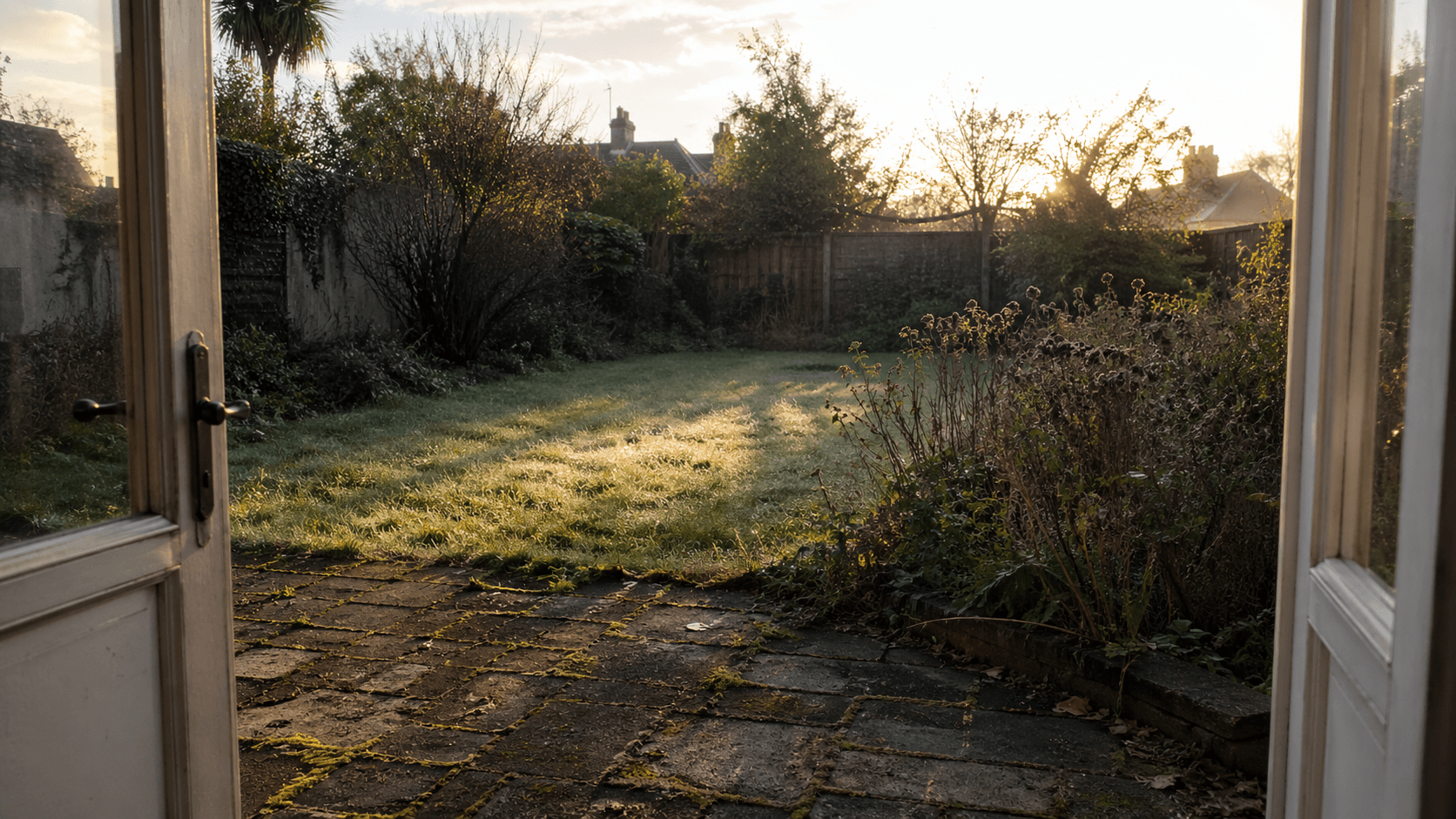
There is a particular kind of paralysis that comes with standing at the back door, looking out at a garden you've been meaning to sort for three years, and feeling absolutely no idea where to put your hands first. It is not laziness. It is not lack of interest. It is the entirely reasonable response to a problem with no obvious entry point. We've written separately about why this happens at all, in our note on landscape paralysis. This one is about what to actually do next.
We hear a version of this constantly. "I want to redo the whole thing but I don't know where to start." And the honest answer is: neither does anyone else, at first. What separates the people who get going from the people who don't is not expertise — it's a framework for making the first decision.
Here is what we've found actually works.
Stop Thinking About the Whole Garden
The most common mistake is trying to solve everything at once. You look at the garden and you see the cracked patio, the overgrown border, the scrappy lawn, the fence that needs replacing, and the corner that gets no sun. That is five separate problems wearing one coat. No wonder it feels impossible.
What we've found helps is picking a single "anchor space" — the part of the garden you spend the most time looking at, or the part that causes you the most daily frustration — and treating that as the project. Not the whole garden. That one space.
Everything else waits. The anchor space gets your attention, your budget, and your energy first. Once that's done, you have momentum, and momentum is worth more than a plan.
Understand What You Have Before You Decide What You Want
Before you make any decisions about what the garden should look like, spend a few weeks just observing what you have. This is slower than it sounds, and more valuable than it sounds.
Walk the garden at different times of day. Notice where the morning light lands and where it doesn't reach until afternoon, if at all. Notice where the ground stays wet after rain. Notice which areas the kids or the dog actually use, and which sections everyone ignores.
What we've found is that most problems in garden redesigns come from making design decisions without knowing the site. You put a seating area in the shade because it looked good on paper. You plant sun-loving perennials in a spot that turns out to face north. You pave over a naturally draining area and create a flood problem.
A fortnight of honest observation is not wasted time. It is the work.
The Three-Zone Framework
Once you know your anchor space and have a handle on how the site actually behaves, we find it useful to think in three zones:
Zone 1: The seen zone. This is the part of the garden visible from your main window or back door. It has the highest visual impact for the least effort. If something is going to lift the whole feeling of the garden quickly, it will happen here. This zone usually gets priority.
Zone 2: The used zone. Wherever people actually go — the seating area, the path to the bins, the kids' play area, the patch where you hang washing. Function rules here. Materials need to be durable, surfaces need to be level, and drainage matters more than aesthetics.
Zone 3: The background zone. The back fence, the side passage, the far corner. This is where structure planting earns its keep — evergreens, boundary screening, things that do a job quietly. It is the last zone to address and often the easiest, because expectations are lower.
If you design in this order — seen, then used, then background — you will always make progress that feels meaningful, even if the work is incomplete.
Phasing Is a Strategy, Not a Compromise
One of the most liberating things we can say is this: you do not have to do everything at once. Phasing a garden redesign across two or three years is not a failure of commitment. It is, in our experience, how the best domestic gardens actually get made.
Phase 1 is the anchor space plus the seen zone. Get that right and it changes how you feel about the whole garden.
Phase 2 is the used zone — sort out the paving, the paths, the practical elements that make the garden liveable.
Phase 3 is the background, the planting that takes years to establish anyway, so there is no advantage to rushing it.
The plants you put in during Phase 1 will have two or three years of growth on them by the time you reach Phase 3. The garden is building itself while you plan the next stage. That is not a consolation. That is good design practice. If you're attacking the whole project yourself, our DIY garden makeover plan breaks the work down by weekend and sequences it in the order that actually holds.
The One Question That Cuts Through Everything
If there is a single question worth asking yourself before you make any garden decision, it is this: what do I want to feel when I'm out here?
Not what it should look like. Not what your neighbour has done. Not what was on a programme last year. What feeling are you after?
Calm. Wildness. Somewhere for the kids to burn energy. A productive kitchen garden. A place that feels private from the road. Somewhere that works for evening drinks when the weather allows.
That answer tells you far more about what to do than any mood board. And once you know it, the decisions get simpler, because you have a way to measure them. Does this choice get me closer to that feeling or further away?
Start there. The rest follows.
Related Notes
- Landscape Paralysis: Why You Want a Beautiful Garden and Still Haven't Started
- DIY Garden Makeover Plan: A Realistic Weekend-by-Weekend Guide
- How Would I Get My Garden From Drab to Fab?
- The Real Cost of Redoing a Small Garden (And What Actually Drives It)
- What Would My Garden Actually Look Like? Seeing Before You Spend
- DIY or Hire a Landscaper? How to Actually Decide
If the anchor-zone framework above is enough to get you moving but you'd like a proper plan for what to actually put there, dedrab will produce one from a single photo. Try it at dedrab.com.