
Plants That Earn Their Keep: What We've Found Thrives in a Temperate Garden
On this page
There is a gap — sometimes a significant one — between the plants that look beautiful in nursery catalogues and the plants that will still be alive and thriving in your garden three years from now. That gap is mostly explained by climate, soil, and the particular combination of conditions that temperate, Atlantic-influenced gardens tend to produce: mild but unpredictable, wet but not reliably so, with winters that rarely freeze hard but springs that take their time arriving.
What follows is not an exhaustive planting guide. It is a reflection of what we've consistently found to perform well in these conditions — and, equally usefully, a few things we've found people buy in hope and replace in disappointment.
Start With Structure, Not Flowers
The most common planting mistake in small gardens is leading with flowers and treating structure as an afterthought. The result is a garden that looks lovely in June and shapeless for the other eleven months.
Structure comes from plants that hold their form year-round — primarily evergreens and plants with strong architectural presence. In a temperate garden, the reliable workhorses here include Sarcococca (sweet box), which gives fragrance in the depths of winter and asks for almost nothing in return; Pittosporum tenuifolium, which tolerates wind and coastal exposure well and provides a handsome backdrop; and Choisya ternata (Mexican orange blossom), which manages the neat trick of being both structural and floriferous in spring.
For something with stronger vertical presence, Ilex (holly) earns its place — slow but permanent, and available in varieties that stay compact enough for small spaces.
What we've found is that getting three or four of these structural anchors in place first makes the rest of the planting decisions considerably easier, because you have a framework to plant around.
The Reliable Performers
Across the border and bed plantings we've seen, a consistent set of plants keeps appearing in the ones that look well-tended and abundant rather than struggling. A few worth knowing:
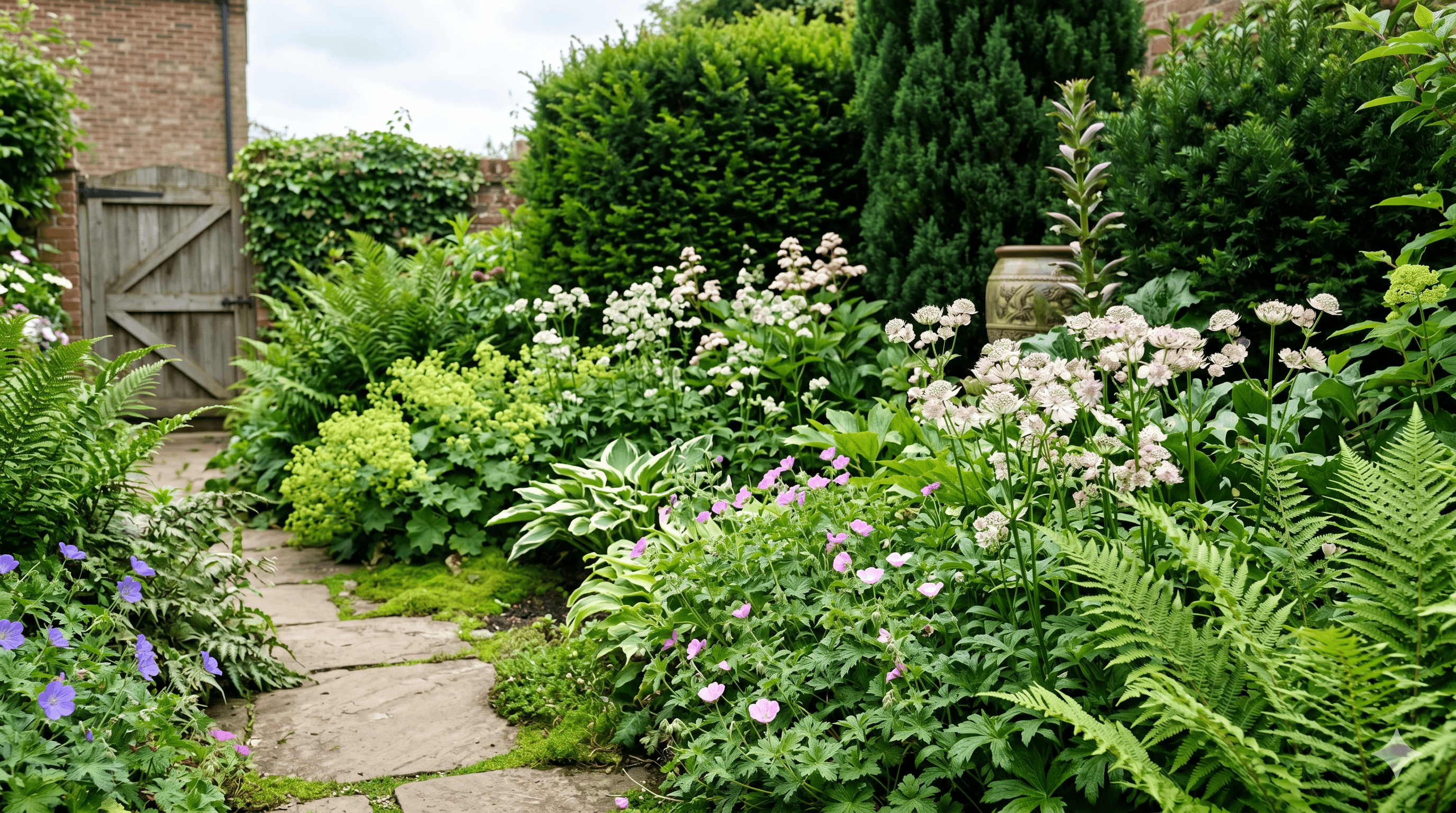
Hardy Geraniums are possibly the most underrated plant category available to the temperate gardener. They tolerate shade, suppress weeds, require almost no maintenance, come back reliably year after year, and flower for weeks. Cut them back hard after the first flush and many will flower again in late summer. The range of varieties available now — from ground-hugging to quite tall, white through pink to deep purple — means there is a hardy geranium for almost every situation. Bees and hoverflies love them too — single-flowered, accessible nectar, long bloom — which is why they sit near the top of any pollinator-friendly planting list.
Astrantia performs consistently well in partial shade and produces distinctive, long-lasting flowers from early summer. It self-seeds gently without becoming invasive and has a looseness that softens formal planting schemes.
Digitalis purpurea (foxglove) is technically biennial, but once you have it established it self-seeds freely enough to feel permanent. It is particularly useful for filling the middle ground of a border in the first years while slower, longer-term plants establish themselves.
Ferns of various kinds are almost unfailingly reliable in a temperate garden. They handle shade, handle wet, require no feeding, and provide movement and texture that many more demanding plants cannot match. Dryopteris filix-mas (male fern) and Polystichum setiferum (soft shield fern) are both evergreen, tolerant, and handsome.
Hydrangeas — specifically the macrophylla and paniculata types — have earned their popularity in these climates because they genuinely thrive in cool, moist conditions. Paniculata varieties in particular are more reliably floriferous than macrophyllas, flower later in the season, and tolerate a wider range of soils.
What We've Found People Buy and Replace
A few categories appear frequently in gardens we're asked to help with, and frequently in the border that needs rethinking.
Lavender is the first. It is not that lavender cannot grow in temperate, wetter climates, it can, in the right spot, with the right soil preparation. But it needs excellent drainage and full sun, and what we've found is that most people plant it in conditions it will merely tolerate rather than thrive in. The result is a woody, sparsely flowering shrub that looks half-hearted within three years. If your garden offers a genuinely hot, well-drained spot, lavender is wonderful. If it doesn't, there are better choices. We've covered the drainage-versus-cold trap in more depth in our note on low maintenance garden ideas by climate zone.
Mediterranean herbs as border planting fall into a similar category. Rosemary, sage, and thyme are perfectly happy in a sheltered, sunny kitchen garden spot. They are less happy as permanent ornamental planting in a cool, wet border, where they tend to become leggy and disease-prone.
Tender perennials treated as permanent. Many plants sold as garden perennials — certain salvias, penstemons in particularly cold or wet areas — will survive mild winters but not consistently harsher ones. This is not a reason to avoid them, but it is a reason to treat them as conditional rather than guaranteed, and not to build the structure of a planting scheme around them.
A Note on Soil
The single biggest variable in what will and won't thrive in your garden is not rainfall or temperature — it is soil. Heavy clay, sandy, chalky, acidic, waterlogged: the same plant can perform completely differently across these conditions even within a small distance.
What we've found worth doing before committing to a planting plan is a basic soil assessment, texture, drainage behaviour after heavy rain, and a pH test if you're planning to grow anything with known preferences. It takes an hour and it saves years of disappointment. The same logic applies to hardiness ratings: see our beginner's guide to plant hardiness for the H1–H7 framework that decides whether a plant survives your winter regardless of how good your soil is.
The plants that earn their keep are the ones matched to your actual conditions, not the ones that looked good in the photograph.
Related Notes
- Your Own Show Garden: How to Steal the Best Ideas From Bord Bia Bloom 2026
- Plant Hardiness in Ireland: A Beginner's Guide to What the Ratings Actually Mean
- 8 Features That Turn a Garden Into a Pollinator Haven
- Low Maintenance Garden Ideas by Climate Zone: What Actually Thrives Where
- What Do the Symbols on Your Plant Label Actually Mean?
- Reviving Your Garden After a Hosepipe Ban: What Needs Help and What Doesn't
- What Will Grow in a North-Facing Garden?
A planting list matched to your actual site, not someone else's catalogue, is what dedrab produces. Single photo in, action plan out, calibrated for your hardiness, soil and aspect. Try it at dedrab.com.