
Your Own Irish Vineyard: How Climate Change Quietly Turned Ireland Into Wine Country
On this page
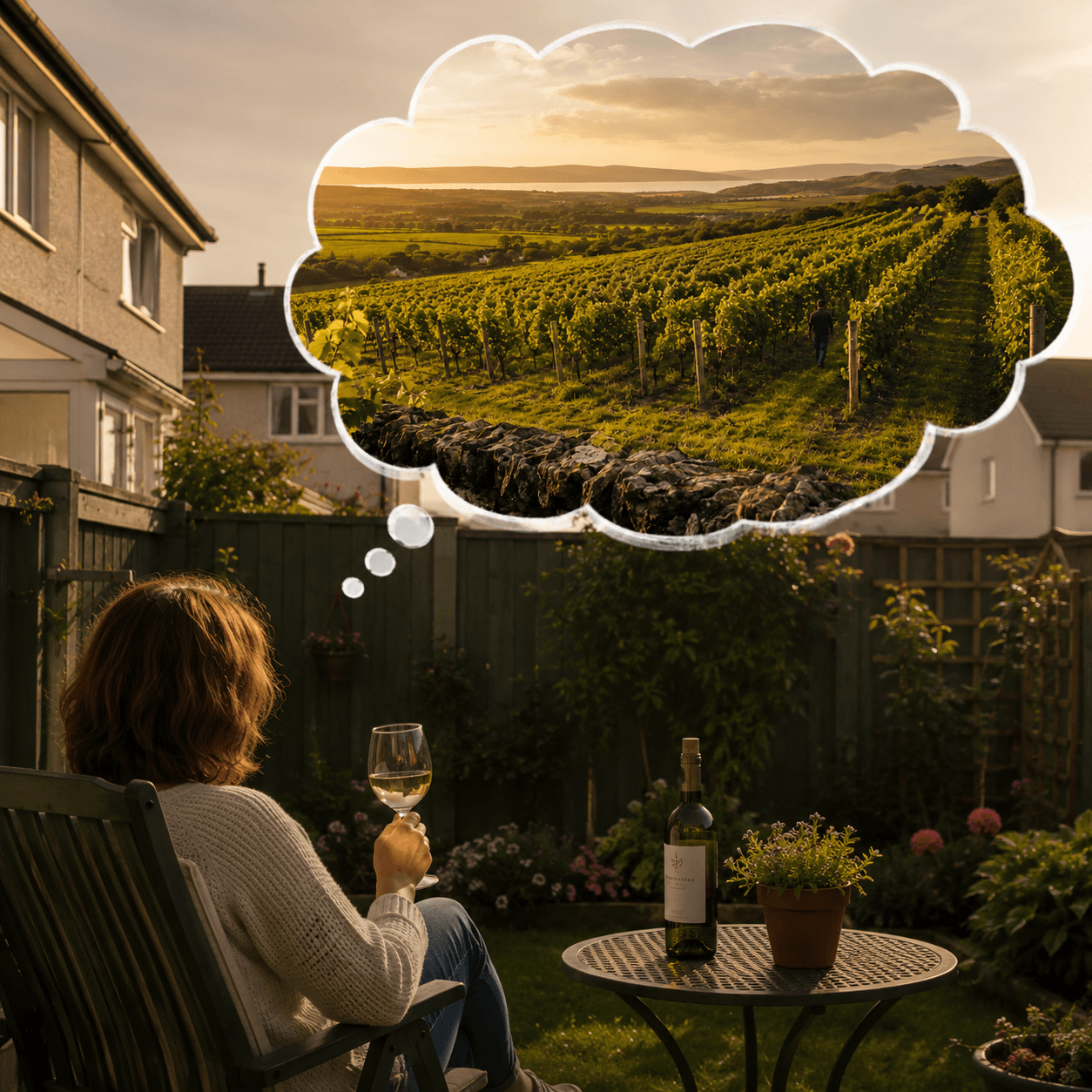
Tell someone twenty years ago that Ireland would have a working commercial vineyard producing wines, winning non cynical comparisons, and they'd have laughed you out of the pub. Grapes? Here? In the rain?
And yet, here we are. There are commercial vineyards quietly producing wine in Dublin, Cork, Kilkenny and Wexford. Some have been at it for over twenty years. A handful are good enough to be sold in restaurants that take their wine list seriously. It is one of the strangest, quietest agricultural shifts of our lifetime, and it tells you something important about the way the climate has changed — and what that means for what you can grow in your own back garden.
Wait — Vineyards? In Ireland?
Yes. Small, single-family operations, scattered across a few wormer, sunnier corners of the island, but vineyards nontheless.
David Llewellyn's vineyard in Lusk, north County Dublin is the pretty established. Founded in 2002 on a south-facing slope a few miles inland from the coast, he produces a small annual run of red and white wines under the Lusca label. His Cabernet Sauvignon / Merlot blend has been served in some of Dublin's better restaurants. His vines have survived more than two decades of Irish winters, which a generation ago would have been considered horticulturally impossible.
Thomas Walk Vineyards in Kinsale, County Cork has been operating since the 1990s, producing wine from Rondo and Phoenix grapes, varieties bred specifically for cool, damp climates. They're often described as Ireland's first organic vineyard.
Lyrath Estate in County Kilkenny has planted vines on its hotel grounds as part of a broader move into estate-grown produce, and they're not alone, there are smaller plantings in Wexford, Tipperary, and elsewhere across the warmer eastern and southern counties.
None of these are going to overtake Bordeaux any time soon. The point isn't volume. The point is that grapes are now ripening to harvest in Ireland, year after year, in places they simply couldn't have ripened forty years ago. The climate that made the vineyards possible is the same climate that's quietly redrawing the hardiness map across Ireland and the UK.
What is the Climate Story Behind It
The reason vineyards work here now comes down to a few patient, measurable shifts in the Irish climate.
Met Éireann's long-term records show that Ireland's annual mean air temperature has risen by approximately 0.9°C since the start of the twentieth century, with the rate of warming accelerating in recent decades. That sounds modest until you translate it into what matters for plants: longer growing seasons, fewer frost days, and warmer averages during the critical April-to-October window when grapes need accumulated heat to ripen.
The technical measure viticulturalists care about is called Growing Degree Days, a running total of how much warmth a plant gets above a threshold (typically 10°C) over the growing season. Wine grapes need a minimum threshold of accumulated warmth to ripen reliably. A generation ago, large swathes of Ireland fell below that minimum. Today, much of the eastern, southern and inland-sheltered parts of the country meet it reliably enough for cool-climate grape varieties like Rondo, Phoenix, Solaris and Seyval Blanc to make a working vineyard.
Teagasc, the Irish agriculture and food development authority, has published research over the past decade on the implications of climate change for Irish horticulture. Their assessments suggest that the range of viable commercial fruit crops in Ireland is expanding, and that the growing season here has lengthened by roughly two weeks compared to mid-twentieth-century norms. Two weeks doesn't sound dramatic, but for borderline crops — grapes, peaches, certain ornamentals — it can be the difference between a viable harvest and a complete failure.
What we've found, in our own observation of gardens across the country, is that the people most willing to experiment with what's possible, the gardeners trying things their parents wouldn't have attempted, are the ones reaping the rewards. The old gardening rulebook for Ireland is, in places, twenty years out of date.
What This Means for Your Garden
You're probably not going to run out to plant a quarter-acre of Rondo grapes any time soon. But the climate that made the Irish vineyards possible is the same climate that's quietly working in your favour every time you choose a plant.
The practical implications for the average Irish garden are these:
The hardiness boundary has moved. Plants we previously categorised as borderline-tender, Hebe, Cordyline, Phormium, Pittosporum, certain salvias and many half-hardy perennials — now survive winters across much more of the country than they did a generation ago. Coastal gardens in west Cork have been growing exotica for decades; what's changed is that gardens in Dublin, Wicklow, Kildare and parts of the midlands are now reliably overwintering plants that used to be glasshouse subjects.
Fruit growing is more interesting than it used to be. Outdoor figs, eating grapes (separate from wine grapes — much easier), apricots, peaches against a south wall, and even kiwi vines are all genuinely worth having a go at in a sheltered or sunny Irish garden today. None of these were standard advice in the gardening books of the 1980s, when the consensus was apples, plums, pears, and not much else.
The "right plant, right place" rule has never been more important, or harder to apply, because the goalposts are activly moving. The plant that was right for the place ten years ago might not be right anymore; the plant that was wrong a generation ago might now be right. This is why is so important to consider a garden design built from current conditions, rather than working off old inherited assumptions. Considering the prettiness of any individual plant choice in isolation no longer works.
And critically: if you're new to a garden, or thinking about redoing one, the easy temptation is to plant what your parents planted, because it's what worked when you were a child. Some of that knowledge still holds, but dont limit yourself there.
The Quietly Bigger Story
The Irish vineyard story matters beyond the vineyards. It matters because it's a visible, measurable, photographable proof of something most of us already know but can find hard to act on: the climate of the place you garden has changed. Not catastrophically, not always for the worse, but enough that the old rulebook needs reading with a critical eye.
That doesn't mean abandoning the classic Irish garden palette. The rhododendrons, the hydrangeas, the herbaceous borders, the meadow corners, these are still magnificent and still right for the climate. What it means is that the outer edge of what's possible has moved, and a gardener willing to push a little will be rewarded in ways their parents couldn't have been.
If you'd like to read the British side of this same story, and the climate shift has been if anything more pronounced in southern England — we've written a companion piece: Your Own British Vineyard: The Quiet Climate Shift That's Made Grapes a Garden Crop.
Related Notes
- Plant Hardiness in Ireland: A Beginner's Guide to What the Ratings Actually Mean
- Your Own British Vineyard: The Quiet Climate Shift That's Made Grapes a Garden Crop
- Landscape Paralysis: Why Great Gardens Don't Happen
- Low Maintenance Garden Ideas by Climate Zone
A planting plan built for the climate you actually have — not the one your grandmother gardened in — is the single most useful starting point for a garden that thrives. Dedrab turns a single photo of your garden into an action plan with planting, materials, costs and phasing tailored to your specific site. Try it at dedrab.com.
References
- Met Éireann, Ireland's Climate
- Teagasc, Horticulture Research and Climate Change
- David Llewellyn / Lusca Vineyard, north County Dublin
- Thomas Walk Vineyards, Kinsale, County Cork
- Royal Horticultural Society, Plant Hardiness Ratings