
Where the Money Actually Goes in a Mid-Size Garden Renovation
On this page
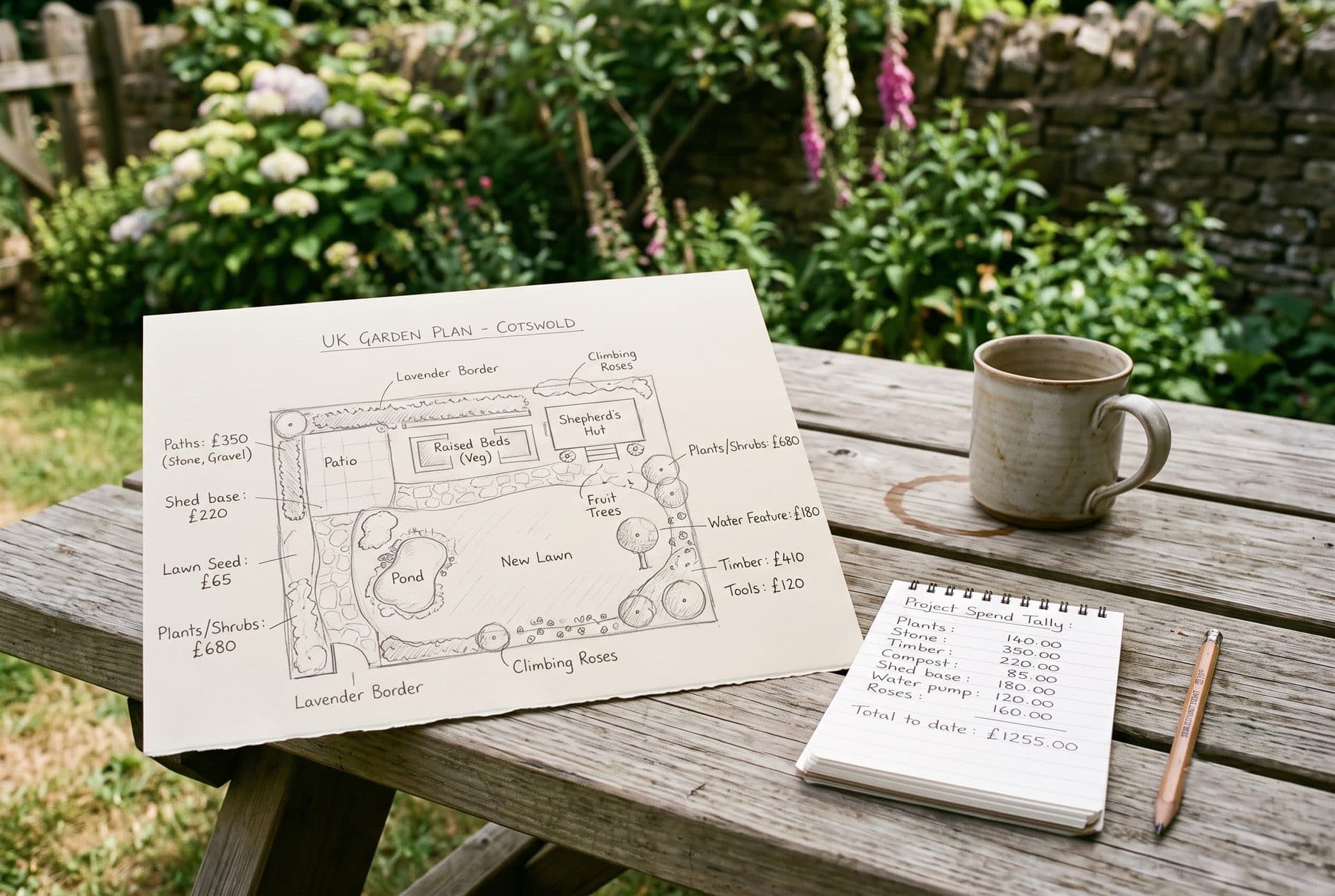
Ranges are honest, but they're not that useful when you're the one holding the number. "Anywhere from £5,000 to £15,000" tells you the size of the problem, not what you're actually paying for. What helps more is a single worked example: one typical mid-size renovation, broken into what each part actually costs, so you can hold your own project up against it and see where you land.
We've built our full cost breakdown across UK, Ireland, US and Australian markets already, with the ranges by element. This one does something different. It takes one representative project and walks through exactly where a typical budget goes, piece by piece, so the numbers feel like a real project instead of a spreadsheet.
The Worked Example
Picture a standard-sized back garden getting a proper refresh: new paving for a patio and path, a rebuilt border, fresh planting throughout, a section of new fencing, and basic lighting. Nothing extravagant, nothing left half-finished. The kind of project most homeowners are actually picturing when they say "redo the garden."
Industry cost guides put a project like this at somewhere between £7,000 and £15,000 in the UK, with small gardens averaging toward the lower end and larger plots pushing well past it. Rather than sit in that range, here's how a typical budget in the middle of it actually splits.
Hard Landscaping: Roughly 60 to 75% of the Budget
This is the biggest slice, and it's usually the one people underestimate. Paving, decking, walls, steps, drainage, and the groundwork underneath all of it. Cost guides consistently put hard landscaping at 60 to 75% of a typical renovation budget, with a 70/30 split between hard and soft landscaping being close to the norm for a design-led makeover.
Within that slice, the groundwork itself, levelling, base preparation, drainage, often costs as much as the visible materials sitting on top of it. It's invisible once the project is finished, which is exactly why it's the part people forget to budget for.
Soft Landscaping: Roughly 25 to 40%
Plants, soil, mulch, turf. This is the smaller slice of the two, and the most flexible one. You can plant at a lower density in year one and let the garden fill in over two or three seasons, which softens the cost without leaving the space looking bare for long. It's the one part of the budget where patience genuinely saves money, rather than just spreading the cost out.
Labour: The Slice That Cuts Across Both
Labour doesn't sit neatly inside either bucket above, it runs through both, and it's usually the part that catches people off guard. Depending on the market and the contractor, labour can account for 40 to 65% of the overall project cost once it's separated out from materials. Skilled trades are in demand, and day rates reflect it. A project that costs a certain amount in materials can cost close to the same again in labour, sometimes more.
Where you're based moves this number too. Labour in and around major cities typically runs 20 to 30% above the national average, driven by demand and overheads rather than the work itself being any different.
What Actually Moves This Example Up or Down
A handful of specifics shift a project meaningfully off this baseline, in either direction.
Level changes push it up. A sloped garden needs steps, retaining structures, or regrading, and all three add labour and materials that a flat site simply doesn't need.
Existing surfaces that need removing push it up. Breaking out old concrete or paving, and disposing of it, is a cost before a single new material goes in.
Access pushes it up. Materials brought through the house or down a narrow side passage cost more to deliver and take longer to install.
Phasing brings it down. Doing the hard landscaping now and the full planting scheme over the following year or two spreads the cost without leaving the garden unusable in the meantime. Our note on a realistic DIY makeover plan covers phasing a project across weekends if you're doing some of the work yourself.
Doing your own groundwork prep brings it down. Clearing, weeding, and breaking up old surfaces don't need a specialist. Handing a contractor a cleared site rather than a jungle changes the labour quote meaningfully.
Why a Single Example Beats a Range
A range tells you what's possible. A worked example tells you what's typical, and typical is what most projects actually turn into once the scope is set. The value of walking through one project in this much detail is that it gives you a mental model, hard landscaping and labour together make up most of it, planting is the flexible part, and a handful of site-specific factors move the whole thing up or down from there.
That mental model is worth more walking into a landscaper meeting than any single number, because it lets you ask better questions about your specific site. Our note on what to know before you hire a landscaper covers exactly which questions to bring with you.
If you want the actual number for your own garden rather than a representative one, that's the harder problem, one that depends on your site's slope, access, existing surfaces, and condition. A Dedrab Garden Action Plan prices a costed breakdown against a photo of your own space, so the worked example above becomes a real number rather than a guess. Begin at dedrab.com.
Related Notes
- Garden Design Cost Breakdown 2026: What a Garden Renovation Actually Costs
- The Real Cost of Redoing a Small Garden (And What Actually Drives It)
- Before You Hire a Landscaper: The Questions You Should Be Able to Answer First
- DIY Garden Makeover Plan: A Realistic Weekend-by-Weekend Guide
References
- MyBuilder, Garden Renovation Cost Guide 2026
- MyJobQuote, Garden Renovation Cost Guide (UK Prices 2026)
- Angi, How Much Does Landscaping Cost?