Before You Hire a Landscaper: The Questions You Should Be Able to Answer First
On this page
- What Do You Actually Want the Garden to Do?
- Do You Know Your Budget — and What It Actually Covers?
- What Style Are You Drawn To — and Can You Show It?
- Do You Know Your Site Conditions?
- Do You Want Design-Only, or Design and Build?
- Are You Implementing It Yourself, or Handing It Over?
- What Is Your Maintenance Commitment, Honestly?
- The Preparation That Actually Matters
- Questions to Ask a Landscaper at the First Meeting
- Related Notes
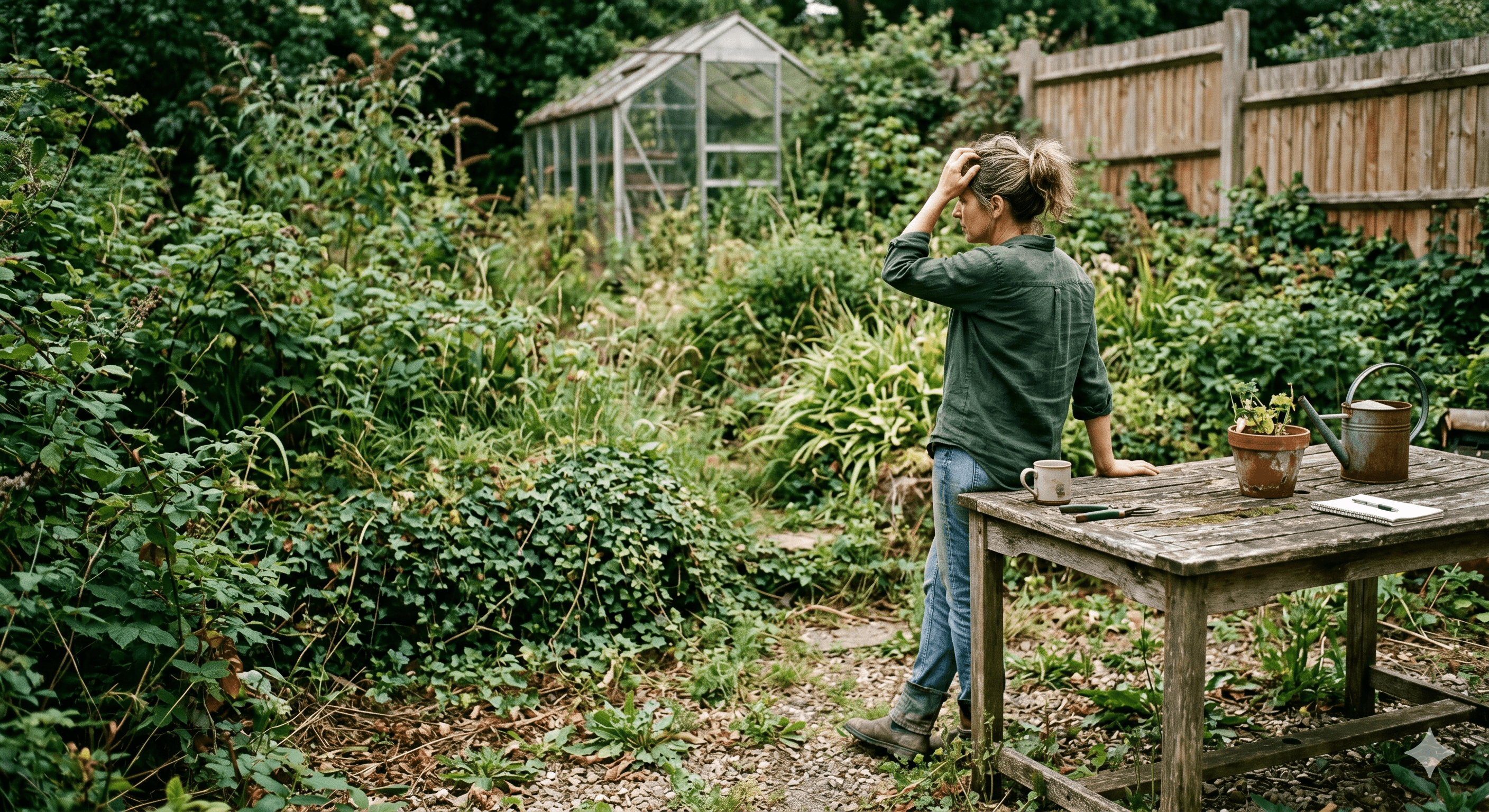
There is a conversation that happens a lot when someone finally decides to do something about their garden. They call a landscaper, describe it vaguely as "a bit overgrown, needs a bit of a lift," and then sit through a consultation trying to answer questions they have never really thought about. What style are you going for? Do you want low maintenance? Have you got a budget in mind? How much sun does the back get in the afternoon?
Most people leave that first meeting feeling slightly embarrassed, like they showed up to a job interview without reading the job description. The more prepared you are before that conversation, the better the outcome, not because landscapers expect you to have all the answers, but because your answers shape the entire project. Vague brief equals vague result.
Before you ask a landscaper anything substantive, there are a handful of things you should be able to answer about yourself, your site, and what you actually want. Here's the working list.
What Do You Actually Want the Garden to Do?
This sounds obvious but most people skip it. A garden is not just a visual space — it is a functional one. Do you want somewhere to host people in the summer? A quiet spot to sit in the morning? A safe space for children to play? A low-maintenance patch you can more or less ignore for two weeks at a time?
The function shapes everything. A garden designed for entertaining needs different hardscaping than one designed for wildlife habitat. Getting clear on how you want to use the space is the single most valuable thing you can do before any professional arrives.
Write a short list. Even just three points. "We want to sit outside in the morning, have space to seat eight people in summer, and not spend more than two hours a week on maintenance." That is enough to have a proper conversation.
Do You Know Your Budget — and What It Actually Covers?
This is where most garden projects go sideways. Homeowners often arrive at an initial consultation with a number in their head that covers the idea of the project rather than the reality of it. According to the Irish League of Credit Unions, average-sized suburban gardens with lawn, raised beds, borders and patio typically land in the €8,000–€14,000 range when design and build are combined. Front gardens or smaller plots average €4,000–€8,000 for a complete redesign and build.
Design fees alone, separate from any construction, tend to sit between 8% and 20% of the total project cost. That is before materials, plants, drainage, lighting, or any of the extras that have a habit of appearing once work begins. Know your hard ceiling, and know whether your number includes VAT. Our garden design cost breakdown for 2026 covers where the money typically goes line by line, if you want a fuller view before the consultation.
If your figure is significantly below what projects like yours typically cost, it is better to know that before you have fallen in love with someone's proposal. A good landscaper will help you phase the work realistically — but they need an honest number to work with.
What Style Are You Drawn To — and Can You Show It?
"Natural but tidy" means different things to different people. So does "modern" or "cottage-y" or "low maintenance but nice-looking."
Before your consultation, spend twenty minutes saving images of gardens that appeal to you. Not gardens you think are impressive — gardens you actually want to sit in. There is a difference. You might find yourself drawn to structured formal layouts with clipped hedging and clean lines, or you might keep saving informal planting with billowing grasses and loose borders. Neither is wrong, but they are very different projects.
Houzz Ireland notes that a garden designer's role is much like that of an architect for your interior — they are interpreting your brief and translating it into a buildable plan. The clearer and more visual your input, the more accurately they can interpret it. Bring those images to your first meeting.
Do You Know Your Site Conditions?
You do not need to be a horticulturalist, but you should have a basic grasp of your site before anyone starts planning plants or paving.
Which direction does your garden face? A south-facing garden in Ireland gets significantly more sun than a north-facing one, which changes the entire planting palette. If you are unsure, stand in your garden at midday and note where the sun is. Is the soil heavy clay that waterloggs in winter, or sandy and free-draining? The difference matters enormously for what will thrive and what will struggle. Knowing your hardiness rating and microclimate is the kind of background that turns a vague chat into a productive one. Landscaping professionals in Ireland emphasise that local knowledge of soil types and weather conditions is one of the most critical things to look for in a designer.
Does water sit on the surface after heavy rain? Are there low spots that flood? Ireland's rainfall means drainage is rarely an afterthought. And what is staying? Mature trees, walls, outbuildings — if a mature tree is going nowhere, your designer needs to know that from day one, not after they have presented a plan.
Do You Want Design-Only, or Design and Build?
This is a distinction that catches a lot of homeowners off guard. As Houzz explains, a garden designer is a design specialist — they produce the plan, the planting scheme, the materials specification. They are not necessarily the person who builds it. A landscaper is the contractor who builds the garden, usually from a plan. Some firms offer both as a combined service; others are specialists in one or the other.
If you hire a designer separately from a landscaper, you are managing two relationships and two sets of fees. If you hire a design-and-build firm, you get one point of contact but potentially less independence in choosing materials or contractors. Neither model is better. But knowing which you want — and which the person you are talking to actually offers — is essential before any conversation about scope or cost begins.
Are You Implementing It Yourself, or Handing It Over?
This question matters more than most people realise, and it changes the shape of the brief entirely. A lot of homeowners want a professional design — a proper plan with plant species, material specifications, phasing, and costings — but want to do some or all of the implementation themselves, either to save money or because they enjoy the work. If that is you, say it upfront.
Kerr & Kerr Landscaping notes that subcontracting and project management structures vary significantly between firms — and if you are planning to be hands-on, you need a designer who will produce plans detailed enough to work from. Some designers will produce a technical specification and planting plan, set out the plants when they arrive on site, and leave the physical planting to you. Others prefer to be involved throughout.
If you are a self-implementing gardener, the most valuable thing you can walk away from a design consultation with is not inspiration — it is a clear Garden Plan. One that tells you exactly what to plant, where, in what order, and what it will cost in materials. That is the document that turns a designer's ideas into something you can execute in phases, over a weekend, at your own pace.
What Is Your Maintenance Commitment, Honestly?
Be straight about this. Most people overestimate how much time they will spend maintaining a garden once the initial enthusiasm has worn off. The gap between "I would love a beautiful cottage garden" and "I can realistically spend thirty minutes a week out here" is where a lot of landscaping projects fail in year two.
Rosehill Palms Landscaping advises asking landscapers specifically which plants they are recommending require low maintenance versus high maintenance — and why. Not all "low maintenance" planting actually is, depending on your soil and climate. Be honest with your designer about time, ability, and enthusiasm. A well-designed garden for someone who can give it two hours a month looks completely different to one designed for someone who will be out there every weekend. Both can be beautiful. But only one will still look beautiful in three years' time.
The Preparation That Actually Matters
Most of these questions have one thing in common: they are asking you to understand your space before you hand it to someone else. The direction it faces. The light it gets. The way water moves through it. The way you want to use it. What you can realistically commit to.
That is not a lot to ask. But it is, genuinely, most of the work. Once you can answer those questions, with photos, a rough sketch, and a few saved images of what you are drawn to, you are ready to have a productive conversation with any designer or contractor. And you will not leave that first meeting feeling like you did not read the job description.
Questions to Ask a Landscaper at the First Meeting
The questions above are the ones you should be able to answer about yourself. Here are the questions worth asking back, framed for the kind of conversation that actually surfaces useful information.
What should I ask a landscaper about their experience?
Ask how long they have been designing or building gardens in your specific area. Local experience matters — soil types, drainage patterns and microclimates vary significantly between regions. Ask to see two or three projects of comparable size and scope to yours. A portfolio of large estate gardens tells you very little about whether they can handle a 60 square metre suburban back garden well.
What should I ask a landscaper about cost?
Ask for a written breakdown separating design fees, build costs, materials, plants and contingency. Ask whether the quote includes VAT, and whether mature plant substitutions, drainage works, or unforeseen ground conditions are inside or outside the number. Ask what happens to the quote if you change your mind on materials halfway through. Vague single-figure quotes are where most projects go sideways.
What should I ask a landscaper about plants?
Ask which plants they are specifying, why those plants, and what hardiness rating each one carries. If they cannot answer that comfortably, they are either rushing the brief or pulling generic lists rather than designing for your specific site. Ask which plants are low-maintenance versus high-maintenance and what that translates to in hours per month — landscape professionals advise being explicit about this rather than accepting the catch-all "low maintenance" label.
Should I ask a landscaper for references?
Yes. Ask for two or three clients you can contact directly, ideally ones whose gardens are now two or three years old, not freshly handed over. Mature gardens reveal whether the design has aged well, whether the planting survived, and whether the build held up. A garden that looked great on handover but failed in year two is a different conversation to one that has matured properly.
What should I ask a landscaper about timing?
Ask when they could realistically start, how long the project will take, and how the work is sequenced. Garden projects almost always run over their original timeline. Knowing whether the variance is two weeks or two months matters for your planning. Ask how they communicate when something slips, and what triggers a re-cost rather than absorbing the change.
Should I ask a landscaper about insurance and qualifications?
Yes. Public liability insurance is a baseline expectation. For larger projects, ask about membership of professional bodies (Association of Landscape Contractors of Ireland, British Association of Landscape Industries, Society of Garden Designers). Membership is not a guarantee of quality, but it indicates the firm is engaged with the trade and has met some external benchmark.
Related Notes
- Plant Hardiness in Ireland: A Beginner's Guide to What the Ratings Actually Mean
- Garden Design Cost Breakdown 2026
- Where to Begin With a Garden Redesign
- The Real Cost of Redoing a Small Garden
- DIY or Hire a Landscaper? How to Actually Decide
- How Do You Fix a Boggy or Waterlogged Garden?
If you want a Garden Plan you can take into a landscaper meeting (or use yourself), dedrab produces one from a single photo of your space. Planting, materials, costings and phasing, all specified for your site. Try it at dedrab.com.
References
- Irish League of Credit Unions — The Complete Cost of a Garden Renovation
- Houzz Ireland — How Much Would it Cost to Redesign My Garden?
- Houzz — 10 Questions to Ask a Landscape Designer
- Gardening Services Dundalk — Questions to Ask a Landscaper Before Hiring
- Kerr & Kerr Landscaping — 10 Questions to Ask When Hiring a Landscaper
- Rosehill Palms Landscaping — What Questions Should I Ask Before Hiring a Landscaper?